
Protein skimmer — principles, selection and use
Protein skimmer — principles, selection and use
The protein skimmer is one of the most understood and simultaneously most misunderstood devices in the hobby. It removes organic matter from the water — but its most important benefit is not organic matter removal. It is oxygenation. This distinction affects how a skimmer should be sized, adjusted and understood as part of the tank’s overall filtration.
How a protein skimmer works
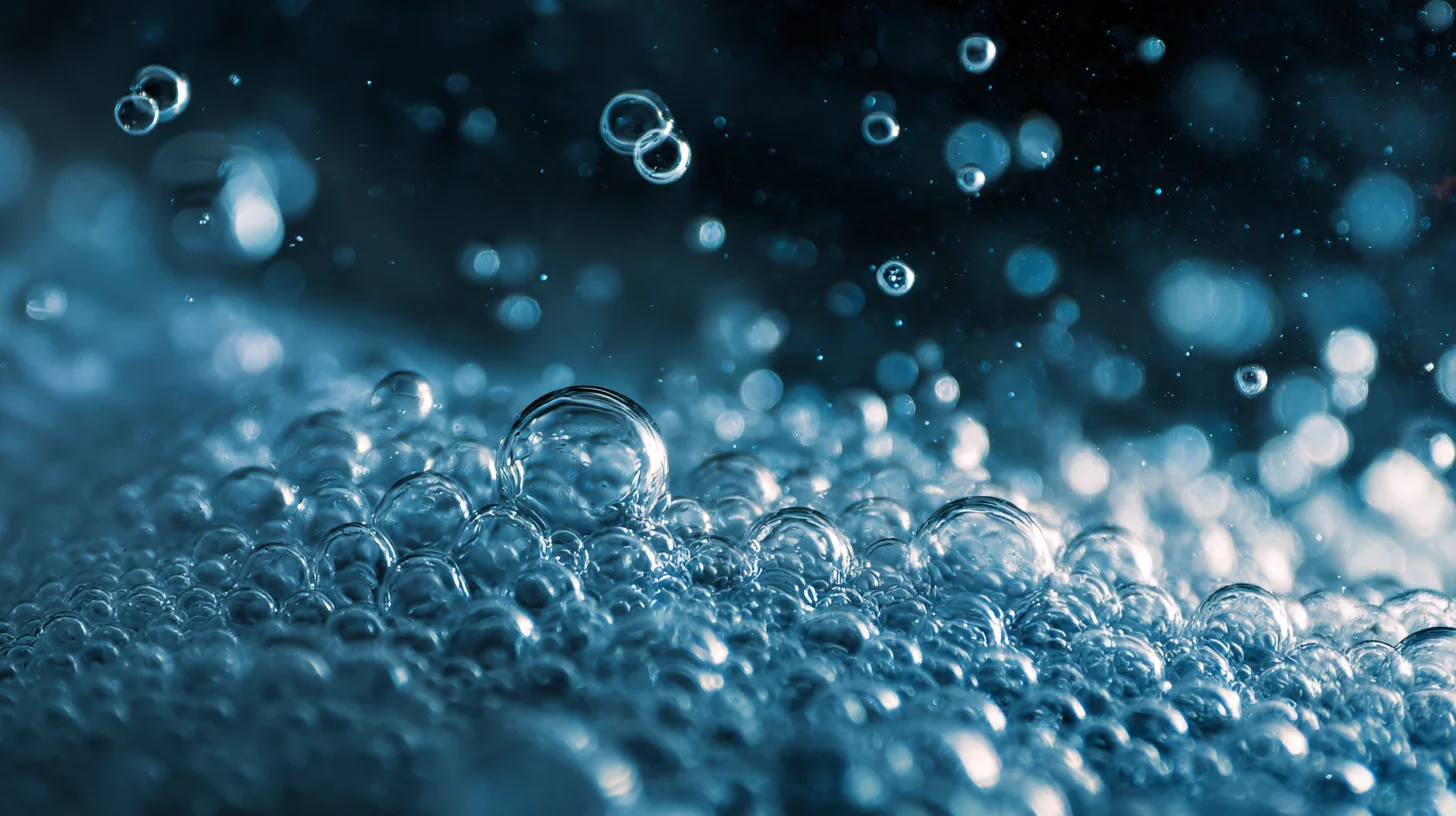
The skimmer’s operating principle is based on adsorption at the air-water interface. As small air bubbles rise through the skimmer’s reaction chamber, surface-active molecules attach to their surfaces — to the interface between bubble and water. These molecules are amphiphilic in nature — they have both a water-attracting and a water-repelling part, and they migrate naturally to the air-water interface. Proteins, lipids and glycoproteins behave this way.
As bubbles rise to the top of the reaction chamber, the foam loaded with organic material condenses and falls into the collection cup. This dark liquid is what the skimmer physically removes from the system. The skimmate colour tells a great deal about how well the device is adjusted — more on this in the adjustment section.
At the same time, extensive gas exchange occurs: oxygen dissolves into the water, carbon dioxide is removed from the water. This is the skimmer’s most important biological function. The tank’s inhabitants — coral zooxanthellae symbionts, bacteria, fish — need adequate oxygen levels. The skimmer is the most effective single device for oxygenating the tank.
What a skimmer removes — and what it does not
A skimmer removes dissolved organic matter (DOC) from the water mass. It is the only device that does this physically — water changes dilute, activated carbon adsorbs, but the skimmer is the only one that actually takes organic matter out of the system before it breaks down.
A key limitation: the skimmer does not remove inorganic compounds. Nitrate, phosphate, alkalinity, calcium, magnesium — the skimmer has no direct effect on these. The skimmer also does not replace biological filtration — nitrification occurs on rock surfaces and substrate, not in the skimmer.
Another often-overrated feature: the skimmer’s effect on nutrient availability is smaller than commonly believed. Intermittent running — turning the skimmer off during light hours to direct nutrients to corals — does not in practice significantly increase the nutrients available to corals. If higher nutrient levels are the goal, this is achieved more effectively by adjusting feeding than by limiting skimming.
Skimmer types
Needle wheel
By far the most common technology today. The pump impeller has needles or cuts that mechanically break the water into extremely fine air bubbles directly in the pump’s turbulence. No separate venturi nozzles, simpler construction, easier to clean.
Needle wheel wear is a recognisable maintenance need: efficiency drops significantly over a year depending on use. Replacement interval 1–2 years. Check spare part availability and price before purchasing a device — sometimes a new pump is cheaper than a replacement impeller.
DC pump vs. AC pump
DC pumps have practically replaced AC pumps in new higher-end skimmers for three reasons:
- The needle wheel can be manufactured larger for a slower rotation speed
- Slow startup prevents clogging at the moment of starting
- The pump stays cleaner in steady use
- Power is continuously adjustable — fine-tuning is easier
Venturi
An older technology where air is drawn into the reaction chamber via the vacuum created by water flow. Still used in some devices and specialist solutions, but the needle wheel has displaced it in the vast majority of product ranges.
Aquaforest All-In-Skim — an integrated approach
The Aquaforest All-In-Skim (2025) represents a new approach to the skimmer’s role. It is not merely a skimmer but a combination of four filtration functions in one device: skimmer, CO₂ scrubber, air filter and biological filter.
CO₂ scrubber — the most important added feature
A traditional skimmer draws in air — indoor air. In a Finnish home, indoor CO₂ levels are typically 800–1,500 ppm in winter, while outdoor air is approximately 420 ppm. The skimmer pumps this CO₂-rich air directly into the water, which acidifies the water and lowers pH — particularly at night when the lights are off and no photosynthesis is occurring in the tank.
The All-In-Skim solves this by integrating a CO₂ scrubber directly into the skimmer’s air intake system. The device includes two parallel CO₂ scrubber units, and thanks to the patented venturi connection, the number of parallel units can be increased to up to ten as needed.
The recirculation feature is particularly significant: the device can recirculate already-treated air back through the scrubber, which keeps CO₂ diffusion extremely low and extends the media’s service life simultaneously. This is an essential difference compared to external CO₂ scrubbers, which are open-closed systems.
The pH effect is measurable: using CO₂ scrapers typically raises pH by 0.2–0.4 units and stabilises it in the 8.0–8.4 range. This is a significant improvement without separate devices or kalkwasser dosing.
Air filter
An activated carbon cartridge above the skimmer’s collection cup filters the exhaust air. Practical benefit: skimmate odour does not spread into the room air. Secondary benefit: the air intake is protected from dust and airborne contaminants.
Biological filter chamber
A separate chamber in the skimmer body where biological filter media can be added. Bacteria colonise the surface and participate in the nitrogen cycle. This does not replace the biological filtration of live rock or substrate, but adds additional capacity particularly in heavily loaded systems.
Venturi construction without diffuser
The All-In-Skim uses a venturi solution that differs from the traditional needle wheel construction, in which the separate diffuser has been eliminated. According to turbulent flow calculation principles, this improves bubble distribution in the reaction chamber. The patented solution aims for denser foam and more effective adsorption.
Available sizes: 150 mm, 200 mm and 250 mm reaction chamber (250 mm coming later). For the 150 mm: light bioload 750 L, medium 500 L, heavy 300 L.
Sizing
Manufacturer volume recommendations for skimmer sizing are a starting point, not a final value. Recommendations are often based on optimistic assumptions about bioload.
A more important sizing criterion is water turnover through the skimmer: the target is 3–4 sump volumes per hour. This means the skimmer continuously receives fresh, unprocessed water — not already-skimmed, recirculated water from the back of the sump. A high concentration gradient is a prerequisite for efficiency.
Practical consequence for placement: the skimmer is positioned in the sump’s first chamber, where water arriving from the tank flows first — before rock, refugium or other processing.
Oversizing is a safer choice than undersizing. A skimmer that is too large is easier to adjust to run drier; one that is too small cannot grow with the tank’s needs.
Placement
Sump
By far the most recommended location. The skimmer in the sump’s first chamber, directly after the tank’s overflow. Here the water is freshest and organic matter concentration is highest — concentration gradient is optimal.
Water level stability is critical: the skimmer is sensitive to water level fluctuations. Level remains most stable in the sump’s first chamber.
Hang-on (on the tank rim)
An alternative in sumpless systems. It works, but with limitations: smaller capacity, more difficult to clean, harder to manage water level. A usable solution in sumpless compact tanks — there is no other option.
In-tank skimmer
In small sumpless tanks — particularly display tanks, nano-reefs and lagoon tanks — the skimmer can be installed directly inside the main tank. Sicce Shark series skimmers (Shark 150 and Shark 300) are designed specifically for this use.
The Shark series construction differs from traditional skimmers: compact, square shape, opaque body (prevents algae growth on internal surfaces) and watertight magnetic mounting for glass or acrylic up to 15 mm. The magnet is submersible — it can also be attached to a sump partition or an AIO tank’s filter chamber if one is available.
The technology differs from the needle wheel: the Shark 150 uses an instant skimming principle where bubbles travel only a short distance to the collection cup. The Shark 300 additionally includes a surface skimmer that actively draws the surface film into the skimmer — a useful feature when the device is inside the main tank and surface flow is not self-directing. The Shark 300 is also ozone-resistant.
Power consumption is extremely low: 4 W (150) and 5 W (300). Volume recommendations: Shark 150 for light bioload 150 L, Shark 300 for light bioload 300 L — in practice, more conservative sizing is recommended, especially in heavily fed tanks.
In-tank skimmer limitations are realistic: capacity does not reach sump skimmer level, the collection cup is small and needs frequent emptying, and the device’s visibility in the tank may compromise aesthetics. These are, however, acceptable compromises when a sump option does not exist — a sumpless tank without any skimmer is in a weaker position for oxygenation and DOC management.
Adjustment
Skimmer adjustment is a balancing act: too wet a skimmate means thin, pale liquid with a lot of water in the collection cup. Too dry means dark, thick, tar-like skimmate and slow collection.
Wet skimmate — tea-coloured or brown, runny liquid. Indicates effective organic matter removal but also water loss. Appropriate for an active tank run with high bioload.
Dry skimmate — dark, almost black, thick and slow. Organic matter is concentrated efficiently, minimal water loss. Appropriate for a tank where higher nutrient levels are targeted.
Break-in time: a new skimmer does not produce proper skimmate immediately. 2–4 weeks pass before the reaction chamber’s surfaces are sufficiently coated with organic matter and operation stabilises. Do not adjust aggressively during the first week.
Cleaning resets the adjustment: after each wash, the break-in time begins again in shortened form — usually a few days are sufficient once surfaces have already been coated.
Maintenance
Collection cup: emptied as needed — in a heavily fed tank weekly or more often.
Reaction chamber: washed monthly or when skimmate production clearly deteriorates. Organic deposits on the reaction chamber’s inner walls begin to reduce the foam bubbles’ adsorption capacity.
Needle wheel: inspected every six months, replaced every 1–2 years depending on use. Wheel wear is gradual — there is no sudden failure, just a quiet decline in efficiency.
CO₂ scrubber media (All-In-Skim or separate scrubber): colour-change indicator media shows service life. Replace before the media has completely changed colour — used media cannot be regenerated at home. The wetting sponge at the bottom is kept moist in RO water.
What a skimmer does not replace
The skimmer is an important part of the system, but it does not alone solve water chemistry management:
Water changes remain the most effective and versatile DOC management tool. Fresh saltwater is practically DOC-free. Water changes also remove inorganic compounds and replenish trace elements in ways the skimmer cannot.
Biological filtration occurs in live rock and substrate — not in the skimmer. Nitrification capacity depends on microbiological diversity, not on skimmate volume.
Activated carbon removes the refractory DOC fraction — particularly aromatic compounds — that the skimmer does not process effectively. The combination of skimmer + activated carbon is more effective than either alone.
Nutrient balance — nitrate and phosphate — requires biological or chemical management: refugium, carbon dosing or water changes. The skimmer does not lower nitrate or phosphate directly.
Practical checklist
- Place in the sump’s first chamber
- Target 3–4× sump volume turnover per hour
- DC pump instead of AC whenever possible
- Replace needle wheel every 1–2 years
- CO₂ scrubber (integrated or separate) is particularly beneficial in Finland during winter
- Do not turn off the skimmer at night — oxygenation is more important than any possible nutrient addition
- Break-in time for a new or cleaned skimmer: 2–4 weeks
References
1. Peer-reviewed research
(There is no extensive peer-reviewed research on the skimmer’s direct biological effects in reef aquariums — the field’s understanding is based primarily on hobbyist literature and device manufacturers’ documentation.)
2. Hobbyist literature and brand documentation
- Coral Garden Podcast (2025). Transcript: protein skimmers, DC pumps, skimmate adjustment. Dong & Adam interview.
- Aquaforest (2025). All-In-Skim — product description and technical specifications. aquaforest.eu
- Aquaforest (2024). AF Air Scrubber — user manual and media description. Available: marine-aquatics.eu
- Holmes-Farley, R. (2024). Reef2Reef: DOC, organic chemistry and the skimmer’s role.
- Aslett, C.G. (2024). Teach a Person to Fish — SPS Academy Part V. reefranch.co.uk
3. Books and textbooks
- Borneman, E.H. (2001). Aquarium Corals: Selection, Husbandry, and Natural History. Microcosm / TFH Publications.
- Knop, D. (1996). Giant Clams. Dähne Verlag. (Skimmer section on basic principles.)