
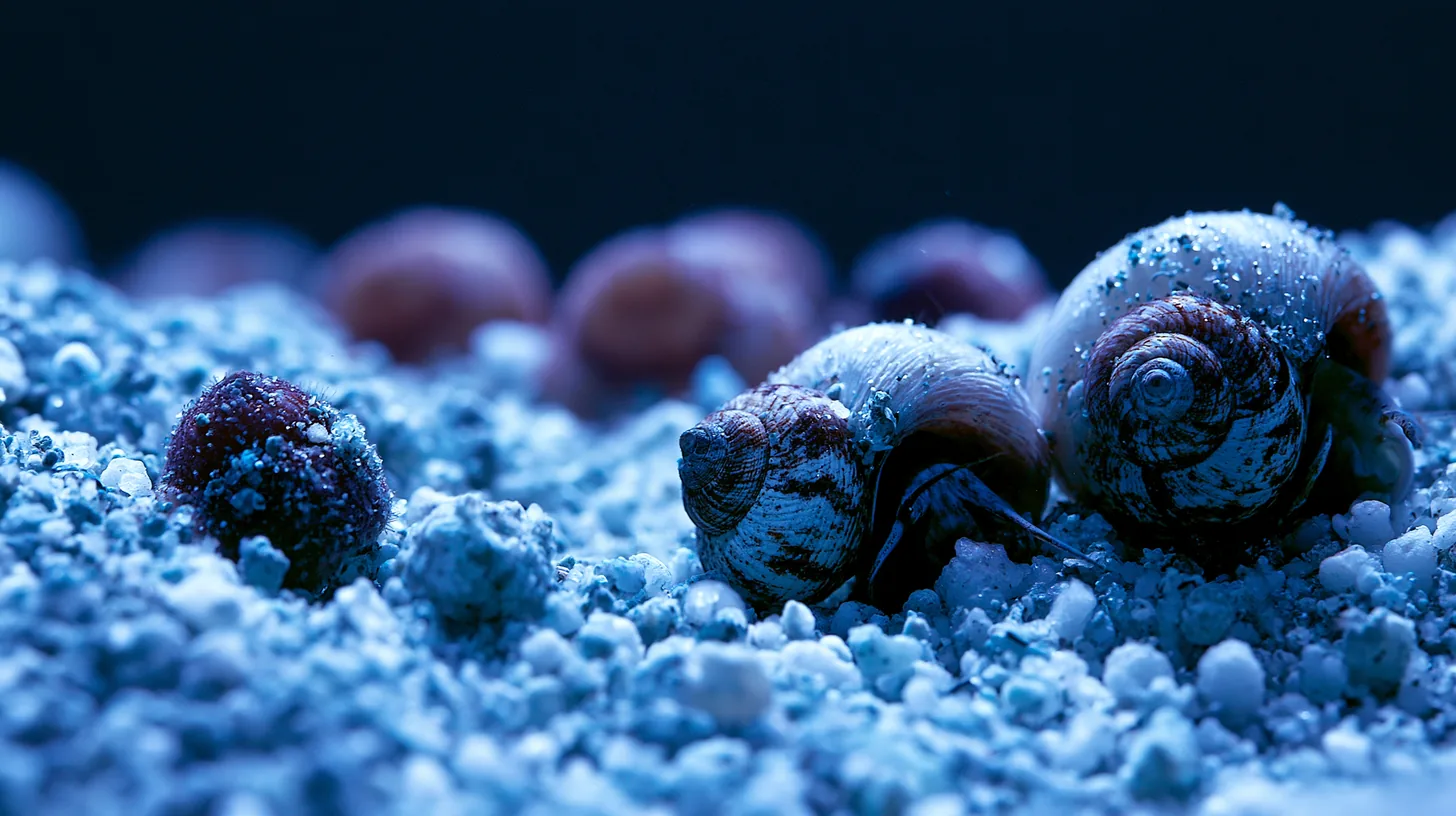
Substrate in practice — three choices and the one dangerous middle ground
Substrate in practice — three choices and the one dangerous middle ground
Substrate is one of the hobby’s most polarising topics. One camp swears by the deep sandbed and considers it the foundation of the entire biological system. The other camp goes bare glass — crystal-clear visibility, easy siphoning, zero risks. Both positions are sincere, but neither is a complete picture of reality. Bottom substrate has genuine biological advantages — and a real risk, if done wrong.
This article covers the three main options, their biological logic, material choices, livestock requirements, and practical maintenance. The biological depth — redox gradients, denitrification mechanisms, H₂S chemistry, and interstitial fauna — is covered in the deep dive article.
1. Three main options
Bare bottom
Bare bottom is the simplest solution and dominates particularly in SPS-focused American reef-keeping culture. The tank floor is easy to siphon, detritus doesn’t accumulate in hidden spots, and there are no “hidden reservoirs” of phosphate or nitrate. Wrasses — especially Halichoeres spp. and other labrid wrasses — cannot burrow into sand, which is stressful for them and can lead to snout injuries when they ram their faces into the glass.
Bare bottom requires compensating biology from elsewhere: the microbial population lives entirely in rock, and there is no interstitial meiofauna from a sandbed. This means there is no natural zooplankton from the substrate layer associated with feeding — all coral nutrition comes from feeding or the water column.
Suitable for: SPS-dominant tanks with no fish species requiring sand, and where nitrate management is handled elsewhere (refugium, carbon dosing, coil denitrifier).
Shallow sandbed (SSB, 2–4 cm)
A shallow sandbed is biologically active but manageable. 2–4 cm is sufficient for most Halichoeres wrasses to sleep in, for pistol-shrimp-like species as shelter, and for meiofauna as habitat. The oxygenated surface extends all the way to the bottom — no anaerobic zones develop, H₂S risks are minimal, and the bed can be siphoned regularly.
The biological value of an SSB is significant: every cubic centimetre of sand contains millions of bacteria and hundreds of living micro-organisms. Gammariid, tanaid, and harpacticoid copepod nauplii drift continuously into the water column — this is genuinely live plankton production that cannot be replaced by bottled food.
With fine sand (max 1.5 mm grain size), an SSB compacts over time — if the substrate doesn’t move with the current and the cleanup crew doesn’t dig through it, the surface hardens and begins growing cyanobacteria. Coarse coral rubble (5–15 mm) is more durable in this respect: it doesn’t compact, coralline algae grows on it quickly, and detritus can be siphoned from between the pieces during weekly maintenance.
Suitable for: The majority of LPS/softie and mixed reef tanks. In Riuttareef’s view, this is the most practical choice for most hobbyists.
Deep sandbed (DSB, 9–15 cm)
The deep sandbed is a historically significant concept: in the 1990s it was a fundamentally understood solution for nitrate management — a thick sand layer creates anaerobic zones in which denitrification bacteria reduce nitrate to nitrogen gas. The idea is biologically sound. The problem is in practice.
A DSB in the display tank accumulates detritus sludge over the years. It is biologically almost impossible to siphon safely, because disturbed anoxic pore water releases hydrogen sulphide (H₂S), which is immediately lethal to corals and fish. Chris Aslett (SPS Academy, 2024) describes cases where healthy fish rolled over immediately when a DSB was disturbed, with the system destabilised for 10–14 days. Total system crashes are documented.
Riuttareef’s position: A DSB in the display tank is a risk that is not recommended. The same biological function can be achieved more safely elsewhere — see section 7.
2. The dangerous middle ground — 5–8 cm
Here is a practical danger that is discussed too rarely: 5–8 cm is too thick to function as an SSB but too shallow to function as a working DSB.
At this depth, anoxic zones develop close to the surface — anoxic enough to produce H₂S — but too shallow for a functional denitrification zone to develop above them. The result is the worst possible combination: no biological benefit, but the risk is present. Brockmann (CORAL Magazine, 2024) warns that if a sandbed is used at depths greater than SSB depth, it requires active meiofauna working through it constantly. Without that, problems arise.
Practical advice: Choose one or the other — 2–4 cm or 9–15 cm in the sump. Don’t land in between.
3. Grain size table
| Grain size | Type | Suitable for | Not suitable for |
|---|---|---|---|
| 0.5–1.5 mm | Fine sand | Valenciennea spp., Halichoeres spp. (sleeping), Synchiropus spp., Opistognathidae, Nassarius spp. | Strong flow (gets blown around), compacts without meiofauna |
| 2–5 mm | Medium coarse | General sand — good compromise, compacts more slowly | Not essential but works well |
| 10–30 mm | Coarse coral rubble | Withstands strong flow, easy siphoning, rapid coralline algae growth | Not suitable for Valenciennea or Halichoeres fish |
4. Materials
Aragonite
Aragonite is a metastable form of calcium carbonate that dissolves slightly more readily than other calcium materials. This has a practical consequence: aragonite sand acts as a minor pH buffer — when pH drops, aragonite dissolves slightly and releases carbonate. The effect is small but in the right direction. Sand also wears down through biological processes and requires top-up over time.
Commercial aquarium sand is typically aragonite-based and suitable for direct use after sufficient rinsing.
Limestone and other calcium materials
All phosphate-free calcium materials are suitable in principle. Substrates made from crushed limestone or fossil shell material are increasingly available commercially. Biologically they perform similarly to aragonite, but dissolve more slowly.
Phosphate risk
Coral rubble or limestone from certain sources can contain phosphate that dissolves into saltwater in contact with the sand. It is worth measuring phosphate more frequently in the early stages. A safer precaution: soak the substrate in CO₂-saturated freshwater for a few days before use — this dissolves phosphate reserves in advance.
Heavy metal check
Coarse coral rubble can contain metal fragments that dissolve into saltwater. Check with a strong magnet before use.
Practical tip: rocks first
Always place rockwork first, substrate second. Heavy rocks should never be placed on top of loose sand — fish dig beneath rocks, sand shifts, and the whole structure can collapse. If there is sand beneath rocks, place acrylic sheets to distribute the weight.
5. Livestock requirements
The substrate determines which fish species can be kept — or conversely: the fish species determine what type of substrate is needed.
Fish for whom substrate is a biological necessity
Valenciennea spp. (sleeper gobies): Continuously sift fine sand in search of food. Clean sand passes out through the gills — this is the species’ natural feeding mechanism. Not suitable for coarse coral rubble, and cannot function on bare bottom. Requires at least 2–3 cm of fine sand over a sufficiently large area.
Halichoeres spp. and other Labridae wrasses: Burrow into sand to sleep. Become seriously stressed without sand and injure their snouts by ramming the glass floor. A cave-like shelter alone is not sufficient — they need sand.
Synchiropus spp. (dragonets/mandarinfish): Pick micro-organisms from the substrate and rock surfaces throughout the day. Only suitable for larger tanks with a large biologically active substrate area. Many captive-bred specimens accept prepared food.
Opistognathidae (jawfish): Build their home in the substrate and need small rocks to create supporting structures. Fascinating species — their burrow is an active construction project.
Mullidae (goatfish): Use long barbels to search for food in sand. Suitable for large tanks with plenty of open sand area.
Cleanup crew by substrate type
The biological maintenance of substrate requires animals that dig, sift, and process sediment. See the cleanup crew article for more detail.
| Species | Substrate | Role | Notes |
|---|---|---|---|
| Archaster typicus | Fine sand | Sifting, detritus | 1 per m² of substrate — note: can consume meiofauna |
| Nassarius vibex | Fine sand | Ploughs substrate, eats detritus | 10–15 per m² |
| Cerithium caeruleum | Both | Biofilm, detritus | 1 per dm² |
| Holothuria atra, H. edulis | Both | Processes large volumes of substrate | Pump guard mandatory |
| Ophiolepis superba | Both | Detritus, organic matter | Long-lived, versatile |
| Calcinus spp. | Coarse rubble | Removes algae and organic matter from the surface | Excellent for coarse rubble |
6. Maintenance
Weekly siphoning
Sludge accumulating between coarse coral rubble must be siphoned out regularly. Use a 10 mm hose and cover a different area with each partial water change. Sludge does not remove itself — the substrate’s inhabitants process it actively and produce fine-particulate waste matter of their own.
Knop’s sand cleaner
Daniel Knop developed a sand cleaner with cross-vanes. An ordinary siphon hose is passive — Knop’s device is moved back and forth through the sand, with the cross-vanes lifting detritus into the water flow. Particles separate from clean sand in the upper chamber: detritus exits through the hose, clean sand settles back to the bottom. The efficiency is so high that Knop recommends siphoning only half the tank floor at a time, every six months.
Why half at a time? For two reasons:
First, meiofauna — populations of gammariids, tanaids, and harpacticoid copepods are partially siphoned away. The remaining half serves as a seeding reservoir, which repopulates the treated half within weeks.
Second, nutrient dynamics. Siphoning the entire floor at once removes a large portion of the nitrogen and phosphate reserves bound in the substrate in one go — the result is a sharply fluctuating nutrient curve that corals must adapt to twice: first to scarcity, then to excess.
Annual partial renewal
About 25% of substrate is worth replacing once a year — mixed into the siphoned material or separately. Never all at once — this would crash the microbial community and expose the tank to cyanobacteria and nitrogen cycle disruptions.
Aragonite sand dissolves over time through biological processes — calcium ions are released and top-up is needed so the layer does not thin below its functional minimum.
7. DSB in the sump — a safer alternative
Aslett’s (2024) solution is clear: a deep sandbed belongs in the sump, not the display tank. The logic is straightforward.
Water flowing into the sump is first filtered through a 100 µm polyester filter sock and skimmed before reaching the DSB compartment. The result is a detritus-free flow — the DSB doesn’t clog with organic load as quickly, and the bed doesn’t break down uncontrollably. When the sump DSB’s effectiveness diminishes over the years — and it will, because detritus accumulates inevitably — the compartment can be emptied, cleaned, and reseeded in a single afternoon. The display tank’s biological support continues undisturbed during this time.
The sump’s DSB is also not directly visible — H₂S release caused by disturbing it does not travel directly over corals but through the sump water, where the skimmer and mechanical filtration can partially break down the load.
This does not eliminate the risk entirely. A DSB is always an anaerobic-maintaining structure, and H₂S is always present in anoxic layers. But risk management is substantially better with a sump placement.
8. Coral species for which a sandbed is the natural environment
Most reef aquarium coral species settle on rock surfaces. A few species are, however, sandbed-specific:
Trachyphyllia spp.: Lives in nature on loose and sandy substrates as a free-living individual. Placed on sand or a low platform in the display tank — not on a rock surface.
Danafungia, Fungia, Cycloseris spp. (plate and mushroom coral species): Occur naturally on sandy and gravelly substrates as free-living individuals. In the aquarium, placed on a slightly elevated rock plate — this prevents sand from getting beneath the tissue and reduces stress.
Tube anemone (Ceriantharia): Builds its tube in sand. Requires a deep sandbed — cannot live on a rock surface.
Sea pens (Pennatulacea): Anchor their stalks in sand. Require deep, loose substrate.
Summary — three questions before deciding
The substrate question is resolved with three practical questions:
Which fish species do you want to keep? If the list includes Halichoeres, Valenciennea, Synchiropus, or Opistognathidae — sand is a biological necessity. If not — bare bottom is a fully justified choice.
How much maintenance are you willing to do? Coarse coral rubble is the easiest to maintain. Fine sand requires a more active cleanup crew and more frequent siphoning.
Where does nitrate management sit? A DSB in the display tank is a risk that is not recommended here. A refugium, coil denitrifier, or a properly sized sump DSB are safer options for biological nitrate management.
References
Peer-reviewed research
- Jørgensen, B. & Gallardo, V. (1999). Thioploca spp.: filamentous sulfur bacteria with nitrate vacuoles. FEMS Microbiology Ecology, 28(4), 301–313.
- Jahn, A. & Theede, H. (1997). Different degrees of tolerance to hydrogen sulphide in populations of Macoma balthica (Bivalvia, Tellinidae). Marine Ecology Progress Series, 154, 185–196.
Hobbyist literature and brand documentation
- Aslett, C. G. (2024). Teach a Person to Fish… SPS Academy Part III. reefranch.co.uk.
- Brockmann, D. (2024). Bottom Substrate: Importance & Maintenance. CORAL Magazine.
- Knop, D. (2024). Bottom Substrate: The Biological Engine. CORAL Magazine.
- Dornhoffer, T. (2014). Nitrogen Cycling Revisited: Sand, critters, carbon, and why you may be under-feeding your tank. AdvancedAquarist.com.
Books and textbooks
- Brockmann, D. (2023). Das Meerwasseraquarium — Von der Planung bis zur erfolgreichen Pflege, 13th ed. Natur und Tier Verlag, Münster.
- Knop, D. (2020). “Trojaner” im Meerwasseraquarium — unerwünschte Aquariengäste erkennen und bekämpfen, 2nd ed. Natur und Tier Verlag, Münster.
- Delbeek, J. C. & Sprung, J. (2005). The Reef Aquarium: Science, Art, and Technology. Two Little Fishes, Miami Gardens.
- Fosså, S. A. & Nilsen, A. J. (1993–1998). Korallenriffaquarium, vols. 3, 5, 6. Birgit Schmettkamp Verlag, Bornheim.