The cycling process — what happens before adding any animals
A new tank is filled with water, equipment is started — and then you wait. But what is actually happening during that waiting period? The cycling process is not just a time-consuming necessary evil. It is the biological foundation without which no tank can function sustainably.
The problem: a new tank is biologically empty
In a natural reef, every square centimetre of rock, sand and water is full of microbes. They break down organic matter, convert harmful nitrogen compounds into harmless ones and continuously maintain chemical balance. This microbial community developed over decades — it does not come into existence overnight.
In a new tank, this biological infrastructure does not exist. When the first animals are added without an adequate microbial foundation, the ammonia they excrete remains unprocessed. The concentration rises rapidly to levels toxic for animals. This is the classic new tank mistake, and it is entirely preventable — but only by allowing the tank to cycle first.
The nitrogen cycle in a nutshell
The heart of the cycling process is the nitrogen cycle. It operates in three stages:
1. Ammonia (NH₃ / NH₄⁺) All organic matter — fish waste, uneaten food, dead organisms — eventually breaks down into ammonia. Ammonia is highly toxic. In acidic water it exists mainly in its ionised, less toxic ammonium form (NH₄⁺), but at higher pH the proportion of free ammonia (NH₃) increases and toxicity rises.
2. Nitrite (NO₂⁻) Microbes that oxidise ammonia — primarily archaea (Nitrosopumilus sp.) — convert ammonia to nitrite. Nitrite is also toxic, though less so than ammonia.
3. Nitrate (NO₃⁻) Nitrite-oxidising bacteria (Nitrospira sp.) convert it to nitrate. Nitrate is the least toxic of the three compounds and accumulates in the tank until removed by water changes or denitrification.
Cycling is complete when both conversions are working reliably — i.e. when added ammonia disappears from the water column quickly and nitrite is no longer detectable. From this point on, the tank can handle biological load.
Who the nitrifying microbes actually are
Hobbyist literature often refers to “bacteria” in general, but the reality is more precise. Research data shows that the most common ammonia-oxidising organism in reef tanks is not a bacterium at all — but an archaeon, Nitrosopumilus sp. These are representatives of the Archaea domain, a separate branch of life alongside bacteria and eukaryotes.
The most common nitrite-oxidising organism is Nitrospira sp., which is a bacterium.
This has practical significance: nitrifying microbes are slow to grow. Their generation time is 20–36 hours, while heterotrophic bacteria multiply in 20–30 minutes. Cycling cannot be artificially rushed without understanding this biological constraint.
What is visible in the tank during the cycling phase
Cycling does not happen invisibly — there are observable signs of the process progressing.
Nutrient spikes: Ammonia rises first, then nitrite with a lag, then nitrate. This classic three-wave sequence is a sign that the process is progressing correctly.
Algae outbreaks: The nutrient spike triggers algae growth almost without exception. Diatoms (Bacillariophyta) come first — a brown, slimy coating on rocks and substrate. As silicate is consumed, a cyanobacteria outbreak often follows (the so-called red slime). Filamentous algae may appear simultaneously or after. These are normal intermediate stages, not signs of a problem.
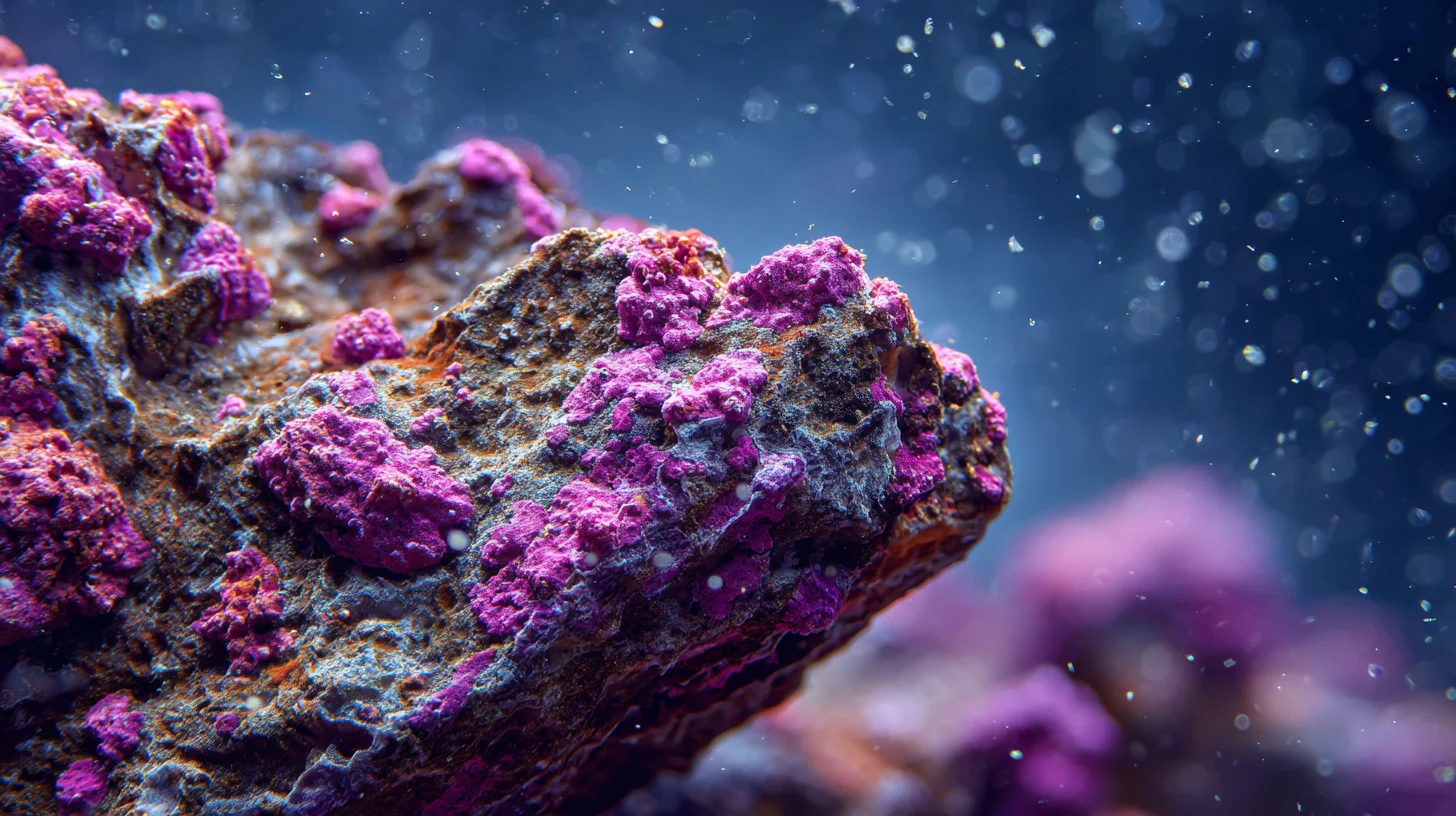
Appearance of coralline algae: The first pink or reddish coralline algae spots (Corallinales) on the rocks are a sign that the tank is beginning to stabilise. This is generally considered one of the visual indicators of maturation.
Cycling is just the beginning — not the end
This is one of the most common misconceptions: when cycling is “done” and ammonia and nitrite are at zero, the tank is ready. It is not.
The start of nitrification is only the first stage. The reef tank’s full biological microbial community — denitrifying bacteria, heterotrophs breaking down organic matter, microbes living in the coral holobiont, archaea and fungi — develops over months. Research data shows that nitrification communities vary considerably between different tanks even in established systems: nearly half of tested tanks completely lacked detectable nitrite-oxidising bacteria.
This means that the order and schedule of adding animals significantly affects how the tank’s biology ultimately develops. Adding animals too quickly after the cycling phase can destabilise the young microbial community before it is sufficiently stable.
The practical implementation of the cycling process — protocols, parameters, testing and timing — is covered in detail in the follow-up practice-level article.
Sources
1. Peer-reviewed studies
- Hovanec, T.A. & DeLong, E.F. (1996). Comparative analysis of nitrifying bacteria associated with freshwater and marine aquaria. Applied and Environmental Microbiology, 62(8), 2888–2896.
- Könneke, M. et al. (2005). Isolation of an autotrophic ammonia-oxidizing marine archaeon. Nature, 437, 543–546.
- Daims, H., Lücker, S. & Wagner, M. (2016). A new perspective on microbes formerly known as nitrite-oxidizing bacteria. Trends in Microbiology, 24(9), 699–712.
- AquaBiomics (2023). Reef tank microbiome survey data — nitrifying communities. aquabiomics.com.
2. Hobbyist literature and brand documentation
- Hovanec, T.A. (2022). Nitrification in Marine Aquaria — Part III. CORAL Magazine, Jan/Feb 2022.
- Levenson, M. (2022). Timing Is Everything — Modified Cycling Phase. CORAL Magazine, Jan/Feb 2022.
- AquaBiomics / Reefability (2023). Reef Therapy Podcast, Episode 128.
3. Books and textbooks
- Borneman, E.H. (2001). Aquarium Corals: Selection, Husbandry, and Natural History. TFH Publications / Microcosm.
- Sprung, J. & Delbeek, J.C. (1994). The Reef Aquarium, Vol. 1. Ricordea Publishing.
- Madigan, M.T., Martinko, J.M. & Parker, J. (2003). Brock Biology of Microorganisms (10th ed.). Prentice Hall.