
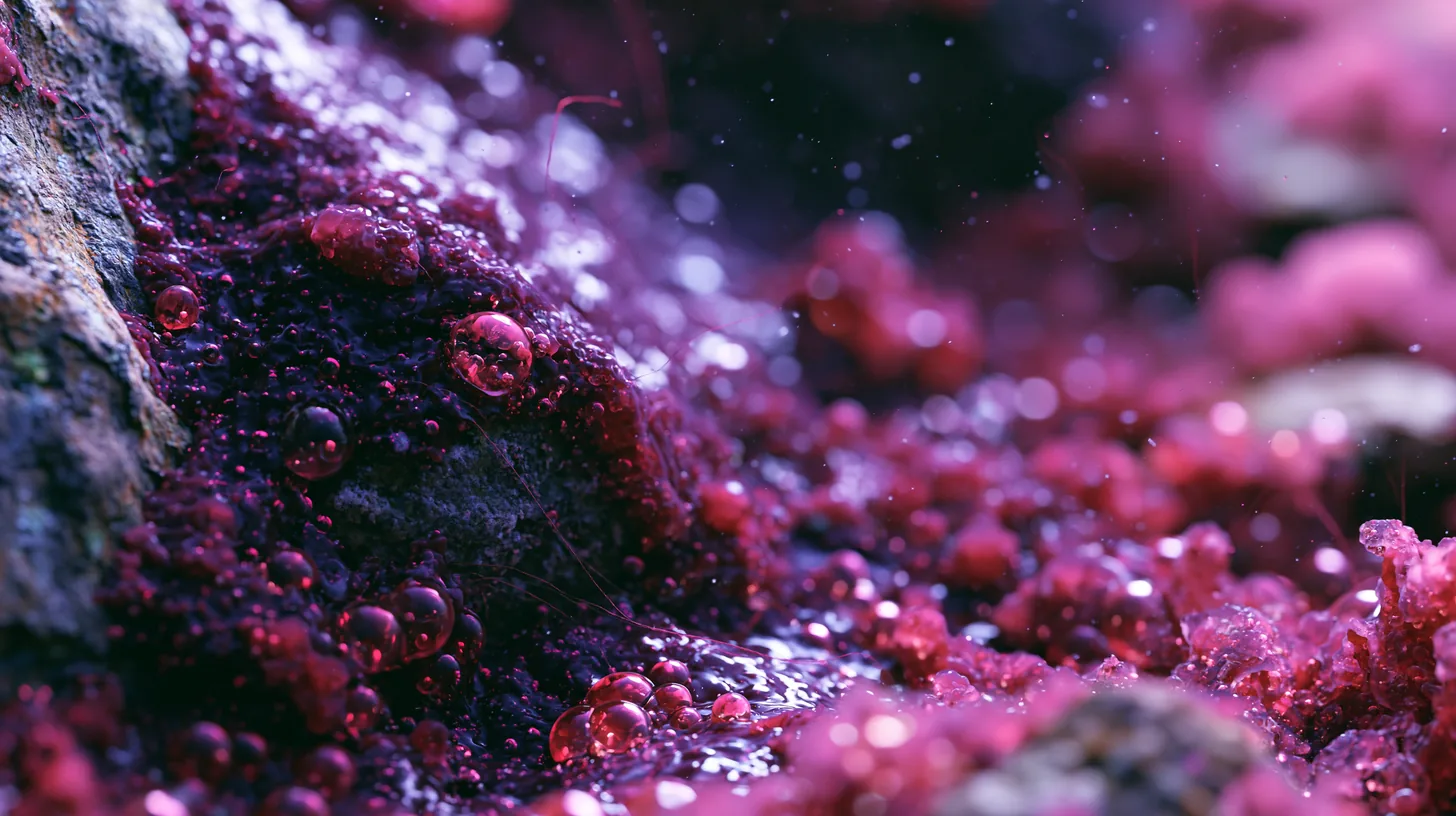
Cyanobacteria — Earth's oldest photosynthesiser in the reef ecosystem
Cyanobacteria — Earth’s oldest photosynthesiser in the reef ecosystem
In the hobbyist community, cyanobacteria are almost exclusively a problem — red slime that needs removing. This is a narrow view of an organism that has shaped Earth’s atmosphere, maintains the nitrogen economy of coral reefs and is part of the coral holobiont. This article opens up the biological reality behind the practice article.
2.7 billion years of evolution
Cyanobacteria are prokaryotes — bacteria without a nucleus — yet they perform oxygenic photosynthesis, a capability previously considered exclusive to eukaryotes. This ability is exceptional on the scale of evolution: cyanobacteria developed it approximately 2.7 billion years ago, and as a result Earth’s atmosphere shifted from anoxic to oxygen-rich. This event is called the Great Oxidation Event, and it led to the extinction of nearly all anaerobic organisms then alive — clearing the way for multicellular life.
Chloroplasts — the organelles in plants and algae that perform photosynthesis — are evolutionarily derived from cyanobacteria. Around 1.5 billion years ago, a primitive eukaryotic cell engulfed a cyanobacterium that did not become food but a permanent internal symbiont. This endosymbiotic event is the evolutionary origin of all photosynthetic plants, algae and the zooxanthellae that are symbionts of corals.
Cyanobacteria are therefore more than a reef problem. They are the branch of the tree of life from which much of visible life has grown.
Cyanobacteria on the natural reef — an essential ecosystem actor
On a natural reef, cyanobacteria are not the enemy. They are an essential part of the reef’s nitrogen economy and ecology.
Nitrogen fixation — the reef’s nitrogen pump
The coral reef is a paradox: it is one of Earth’s most productive ecosystems, yet it exists in tropical water where inorganic nutrients are extremely scarce. How does the reef sustain its productivity?
One key answer is nitrogen fixation. Certain microorganisms — diazotrophs — can convert atmospheric nitrogen gas (N₂) into biologically usable ammonium (NH₄⁺). This ability is absent in plants, animals and most bacteria — it is a special trait requiring the nitrogenase enzyme complex.
Cyanobacteria are the most important diazotrophs on natural reefs. The genus Trichodesmium is the most well known: it forms macroscopic filamentous colonies that float at the sea surface and fix nitrogen in the light. Trichodesmium alone is responsible for an estimated 25–50% of all biological nitrogen fixation in the tropical ocean.
In the reef ecosystem, nitrogen fixation occurs at multiple levels simultaneously:
- In open water — planktonic cyanobacteria such as Trichodesmium and Crocosphaera
- On rock surfaces and sediment — benthic cyanobacterial microbial mats
- In the coral holobiont — cyanobacteria in coral tissue and skeleton
Lesser et al. (2004, Science) made a breakthrough discovery: symbiotic nitrogen-fixing cyanobacteria were found in coral tissue. This means the coral does not merely tolerate certain cyanobacteria — it actively exploits them for nitrogen acquisition.
Endolithic cyanobacteria — inhabitants of the coral skeleton
The coral skeleton is not a dead structure. It is an active biological environment housing a diverse endolithic community — organisms that bore into calcium carbonate and live within it.
Cyanobacteria are pioneer species of the endolithic community. Plectonema terebrans, Mastigocoleus testarum and Halomicronema excentricum are among the first documented prokaryotes from within the green zones of coral skeletons. They bore into the skeleton and form a community whose density increases deeper as light diminishes.
The functional roles of the endolithic community are diverse:
Primary production: Endolithic cyanobacteria photosynthesise inside the skeleton, using light that penetrates through coral tissue. They produce organic carbon that transfers to coral tissue — particularly during bleaching, when zooxanthellae are gone and the coral faces an acute energy deficit.
Nitrogen fixation in the skeleton: The endolithic community contains diazotrophs. Stable isotope experiments have shown that endoliths fix nitrogen and transfer it to tissue — an important nitrogen supply route for the coral, especially in nutrient-scarce conditions.
Skeleton dissolution: Cyanobacteria also participate in the biological dissolution of the skeleton — bioerosion. This is part of the natural reef material cycle: dead skeletons break down, minerals are released and form sand.
A study published in Nature (2022) showed that endolithic community diversity correlates inversely with bleaching susceptibility. Species with more diverse endolithic microbiomes bleached less often and recovered faster. A cyanobacteria-dominated, low-diversity endolithic community, by contrast, was associated with higher bleaching sensitivity — possibly through excessive nitrogen transfer that disrupts the balance between the coral and its zooxanthellae symbiont.
The biochemistry of nitrogen fixation — why it is so special
The triple bond in nitrogen gas (N₂) is one of the chemically strongest molecular bonds. Breaking it and reducing nitrogen to ammonium requires considerable energy and a specialised enzyme complex, nitrogenase.
There is one critical constraint on nitrogenase function: oxygen inactivates it. This creates a fundamental problem for photosynthetic cyanobacteria — photosynthesis produces oxygen, but nitrogen fixation cannot tolerate oxygen. How do cyanobacteria solve this?
Different species have developed different solutions:
Temporal strategies: Unicellular cyanobacteria such as Crocosphaera separate the processes in time — photosynthesis during the day, nitrogen fixation at night. Nocturnal nitrogen fixation explains why nitrogenase activity is measurable as a nighttime pulse.
Structural strategies: Filamentous cyanobacteria such as Trichodesmium and Anabaena developed specialised cells — heterocysts — in which oxygenic photosynthesis does not occur. Heterocysts have thicker walls, low oxygen content, and nitrogenase activity is highest in precisely these cells. Heterocysts are evolution’s solution to an incompatible problem within a single cell.
Community strategies: Some cyanobacteria live in close association with heterotrophic bacteria that consume oxygen, creating a micro-anaerobic environment for nitrogen fixation.
Cyanobacteria in the closed system — why they win the competition
The practice article noted that cyanobacteria thrive at both high and low nutrient levels. The deeper question is: why? What makes cyanobacteria such a persistent competitor?
Nitrogen fixation as a competitive advantage
When nitrate and ammonium are scarce, other photosynthetic organisms — algae, cyanobacteria, coral zooxanthellae — compete for the same nitrogen sources. Nitrogen-fixing cyanobacteria can bypass this competition entirely: they take their nitrogen from the air.
This is an exceptional competitive advantage in a nitrogen-limited environment. When a hobbyist drives nitrate to zero with GFO, carbon dosing or aggressive filtration, they are not removing nitrogen from cyanobacteria — they are removing it from their competitors.
Polyphosphate storage
Many cyanobacteria can store phosphate as intracellular polyphosphate granules — essentially phosphate batteries. When phosphate is available, they stock up. When phosphate disappears from the water, they draw on their reserves. This buffering gives them resilience to phosphate fluctuations to which other organisms respond immediately.
Exopolysaccharides — the foundation of biofilm
Cyanobacteria produce abundant exopolysaccharides (EPS) — slime that forms the foundation of biofilm. EPS has several functions:
- It anchors cyanobacteria to surfaces despite flow
- It forms a protective layer against UV radiation, desiccation and chemical stresses
- It binds metals and trace elements — some trace elements remain within the biofilm for use
EPS is part of why a cyanobacteria mat is mechanically persistent and returns quickly after removal: the base structure remains on the surface even after the visible biomass is removed.
Toxins — biological weapon or byproduct?
Many cyanobacteria produce bioactive compounds — cyanotoxins. The best known are:
Microcystins — cyclic peptides that inhibit protein phosphatases. Produced primarily by the genus Microcystis in freshwater environments, but marine genera are also known.
Lyngbyatoxins — compounds produced by Moorea producens (formerly Lyngbya majuscula). On tropical reefs this species has caused skin irritation and respiratory symptoms in hobbyists from water aerosol alone.
Aplysiatoxins — membrane-active compounds that cause irritation of skin and mucous membranes.
The ecological function of cyanotoxins is debated. One hypothesis is that they act as allelopathic compounds — they hinder competing organisms. Under phosphate deficiency, toxin production increases in several species, suggesting that toxins participate in phosphorus acquisition.
The most important observation for hobbyists is related to antibiotic treatment: under antibiotic stress, cyanobacteria can release intracellular toxins into the water column. This is documented in Microcystis aeruginosa research — the antibiotic disrupted cells, releasing previously cell-bound toxin. The mechanism is the same in a reef aquarium. This is one concrete biological reason to avoid antibiotics as a primary treatment.
Ammonia preference — link to the nitrogen cycle
The practice article noted that cyanobacteria prefer ammonia over nitrate by approximately ten-fold. The biological explanation is energetic.
Ammonium (NH₄⁺) is already a reduced form of nitrogen — cells can use it directly for amino acid synthesis without additional energy. Using nitrate (NO₃⁻) first requires reduction by nitrate reductase and nitrite reductase — a process that consumes NADPH and energy.
When ammonia is available, cyanobacteria shut down their nitrate uptake pathway entirely — this is an actively regulated transcription-level response. Ammonia inhibits the expression of transporter proteins needed for nitrate uptake. Result: cyanobacteria take ammonia and leave nitrate for others.
This explains the Coral Garden Podcast observation: ammonia dosing can theoretically worsen cyanobacteria problems. In practice, a sufficient nitrifying bacterial population converts ammonia to nitrate before cyanobacteria can take it — which is why reported experiences vary widely.
Allelopathy — chemical competition in the microbiome
Cyanobacteria do not compete only for nutrients — they engage in chemical warfare. Many species secrete compounds that inhibit the growth of competitors.
Research has shown that cyanobacterial allelopathic compounds can:
- Inhibit the growth of other algae and cyanobacteria species
- Disrupt competitors’ photosynthesis
- Prevent competitors from attaching to surfaces
Interestingly, allelopathy is bidirectional. The same research group that studied cyanobacteria’s allelopathic effects also found that Phormidium sp. cyanobacteria can ecologically displace toxic cyanobacteria species — not through nutrient competition but via allelopathic compounds.
This dynamic is relevant in the aquarium: competition between cyanobacteria species means that not all cyanobacteria outbreaks are the same. Some species are more aggressive allelopaths, others more harmless. Species-level identification would be practically valuable, but is not achievable with hobbyist tools without molecular biology.
The microbiome dysbiosis perspective
In a healthy tank, cyanobacteria are always present — they are part of the normal microbiota. A problem outbreak is a sign of dysbiosis: an imbalance in the microbiome community where one group dominates at the expense of others.
On natural reefs, this balance is maintained by several mechanisms simultaneously:
Grazing: Many reef animals eat cyanobacteria — sea urchins, certain fish, snails. In an aquarium, the absence of these grazers can give cyanobacteria an advantage.
Microbial competition: Heterotrophic bacteria compete with cyanobacteria for surfaces and organic matter. A diverse heterotrophic microbiome keeps cyanobacteria in check.
Viral infection (cyanophages): Cyanobacteria are the target of the ocean’s most abundant viruses — cyanophages. It is estimated that up to 10–50% of cyanobacterial biomass is destroyed daily by cyanophages in the natural ocean. In an aquarium, cyanophage populations are small and their role in the sparse ecological system is unclear — but a biologically significant factor is absent from the closed system.
Physical conditions: On natural reefs, flow is powerful and variable. It mechanically disrupts biofilms. In a closed tank, flow is more even and biofilm can develop undisturbed in dead zones.
Open questions
Cyanobacterial ecology in reef environments is an active area of research, and several key questions remain open:
Mechanism of trace element deficiencies: Fauna Marin’s ICP database shows that iodine, fluoride and bromine deficiency correlates with cyanobacteria outbreaks. The mechanism is unknown. Iodine and bromine are known to have antimicrobial effects — they may support microbial communities that compete against cyanobacteria. But this is hypothesis, not established research.
Cyanobacteria’s role in coral holobionts: Lesser et al. (2004) found symbiotic nitrogen-fixing cyanobacteria in coral tissue. How widespread is this? Which coral species benefit most? Can a cyanobacterial symbiont turn opportunistic when conditions change?
Role of cyanophages in the aquarium: Cyanophages are an important cyanobacterial population control on natural reefs. Are they present in the aquarium? If not, could they be introduced?
Endolithic community and coral health: The most recent research strongly suggests that endolithic community diversity is linked to coral health. How could this be exploited in the aquarium?
Summary
Cyanobacteria are a problem in the aquarium — but they are a problem precisely because they are biologically so capable. The ability to fix nitrogen from air, store phosphate, produce biofilm and deploy chemical allelopathy makes them an exceptionally resilient competitor.
On the natural reef, these same properties make them an indispensable ecosystem actor. Nitrogen fixation sustains reef productivity. The endolithic community supports corals during energy deficits. Cyanobacteria living in the holobiont supply nitrogen directly to the coral.
The closed aquarium’s problem is not the presence of cyanobacteria — it is the absence of the ecological balance that keeps them in check on natural reefs. Grazers, cyanophages, a diverse microbiome and powerful variable flow are the mechanisms a closed system cannot fully replicate.
References
Peer-reviewed research
- Lesser, M. P., Mazel, C. H., Gorbunov, M. Y. & Falkowski, P. G. (2004). Discovery of symbiotic nitrogen-fixing cyanobacteria in corals. Science, 305(5686), 997–1000. https://doi.org/10.1126/science.1099128
- Kayanne, H., Hirota, M., Yamamuro, M. & Koike, I. (2005). Nitrogen fixation of filamentous cyanobacteria in a coral reef measured using three different methods. Coral Reefs, 24, 197–200.
- Stal, L. J. & Zehr, J. P. (2008). Cyanobacterial nitrogen fixation in the ocean: diversity, regulation and ecology. In: What is so Special About Marine Microorganisms? Springer.
- Marcelino, V. R. & Verbruggen, H. (2016). Multi-marker metabarcoding of coral skeletons reveals a rich microbiome and diverse evolutionary origins of endolithic algae. PLOS ONE, 11(10), e0164933.
- Marcelino, V. R., Morrow, K. M., van Oppen, M. J. H., Bourne, D. G. & Verbruggen, H. (2022). Greater functional diversity and redundancy of coral endolithic microbiomes align with lower coral bleaching susceptibility. The ISME Journal, 16, 2028–2042.
- Wu, J., Shang, L., Lin, Y., Mao, Y., Li, H. & Song, L. (2020). Resistance of cyanobacteria Microcystis aeruginosa to erythromycin with multiple exposure. Chemosphere, 249, 126143.
- Paerl, H. W. & Huisman, J. (2008). Blooms like it hot. Science, 320(5872), 57–58.
Hobbyist literature and brand documentation
- Fauna Marin ICP database — Cyano Prediction function. faunamarin.de.
- Aslett, C. G. (2024). Holosystemics Part III: The Prokaryotes of the Coral Holobiont. Reef Ranch Publishing.
Books and textbooks
- Brock, T. D. & Madigan, M. T. (2015). Biology of Microorganisms, 14th ed. Pearson, Upper Saddle River.
- Falkowski, P. G. & Raven, J. A. (2007). Aquatic Photosynthesis, 2nd ed. Princeton University Press.
- Delbeek, J. C. & Sprung, J. (2005). The Reef Aquarium: Science, Art, and Technology. Two Little Fishes, Miami Gardens.