Lighting — the role of light in a reef aquarium
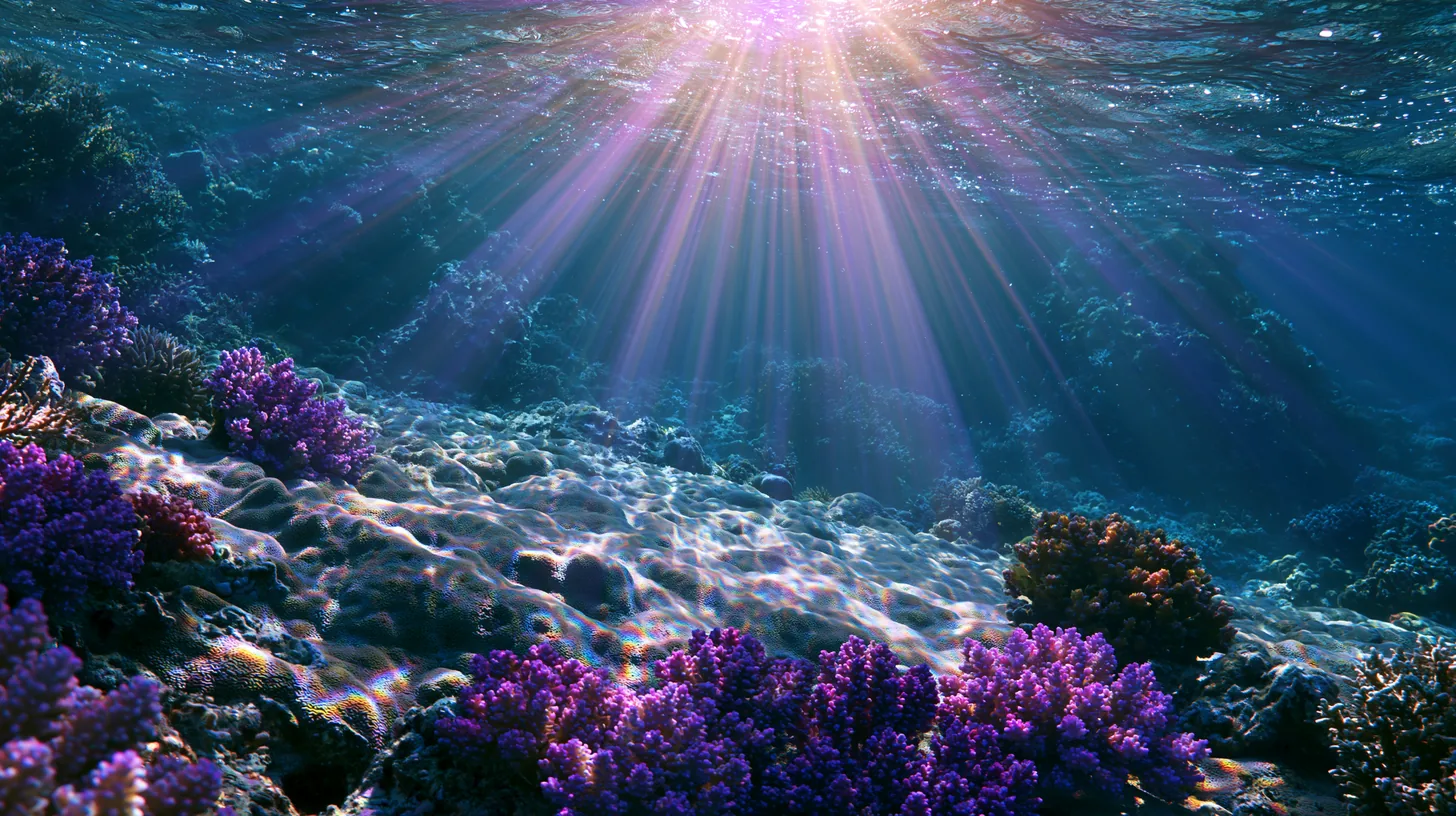
Light is not just aesthetics — for most corals kept in a reef aquarium, it is their primary source of nutrition.
Why do corals need light?
Most corals kept in reef aquariums live in symbiosis with microscopic algae called zooxanthellae. These algae reside inside the coral’s tissue and, through photosynthesis, produce sugars that can supply up to 70–90% of the coral’s energy needs.
Without sufficient light, zooxanthellae cannot produce enough energy. Corals weaken, lose colour, and become more susceptible to disease. Equally, too much light is harmful — it stresses corals and can lead to bleaching, in which corals expel their zooxanthellae as a protective response.
Correct lighting means balance: enough light for energy production, but not so much that it overwhelms the coral’s radiation management systems.
PAR — measuring light intensity
PAR (Photosynthetically Active Radiation) measures the intensity of photosynthetically active light in the wavelength range of 400–700 nm. The unit is µmol m⁻² s⁻¹ (micromoles of photons per square metre per second).
PAR is the single most important number for understanding how much light corals receive at different depths in the tank.
Approximate PAR targets by coral type:
| Coral type | PAR target (µmol m⁻² s⁻¹) |
|---|---|
| Shade LPS and soft corals | 50–150 |
| Mixed reef / LPS | 100–250 |
| SPS (Montipora, Stylophora) | 150–350 |
| Demanding SPS (Acropora) | 400–800 |
These are reference values — variation between species is significant. The key is to measure, not guess.
DLI — total daily light dose
DLI (Daily Light Integral) tells you how much light a coral receives over the course of an entire day. It combines the instantaneous PAR reading with the photoperiod length into a single figure: mol m⁻² d⁻¹.
DLI is useful because the same daily dose can be delivered in many ways — for example, with a shorter photoperiod at higher intensity, or a longer photoperiod at lower intensity. Both affect corals in a similar way, provided sudden overexposure is avoided.
Practical DLI targets:
| Coral type | DLI (mol m⁻² d⁻¹) |
|---|---|
| Softie / shade LPS | 3–6 |
| Mixed reef LPS | 5–9 |
| SPS (Montipora, Stylophora) | 8–14 |
| Demanding SPS (Acropora) | 12–20 |
Spectrum — it’s not just brightness
PAR measures the quantity of photons, not their wavelength. Spectrum — the colour distribution of light — affects how corals and zooxanthellae use that light.
Corals absorb light most efficiently at specific wavelengths:
- Blue (430–490 nm): the primary absorption peak for chlorophyll, penetrates deeper into water
- Red (620–700 nm): a secondary chlorophyll peak, attenuates more quickly in water
- Green and yellow: activation of fluorescent pigments
In practice, this means a good reef light produces a broad spectrum — not just blue. Pure blue looks dramatic but does not serve coral biology as well as a balanced full spectrum.
Further reading
This article covers the core concepts of reef aquarium lighting. Practical implementation — fixture selection, optics, photoperiod programming, and introducing a new light — is covered in the lighting in practice article. Zooxanthellae biology, photo-acclimatisation at the cellular level, and the scientific background are explored in the deep-dive article.
References
1. Peer-reviewed research
- DiPerna, S. et al. (2018). Effects of variability in daily light integrals on the photophysiology of the corals Pachyseris speciosa and Acropora millepora. PLOS ONE, 13(9): e0203882.
- Hoegh-Guldberg, O. (1999). Climate change, coral bleaching and the future of the world’s coral reefs. Marine and Freshwater Research, 50(8), 839–866. https://doi.org/10.1071/MF99078
- Muscatine, L. & Porter, J.W. (1977). Reef corals: mutualistic symbioses adapted to nutrient-poor environments. BioScience, 27(7), 454–460.
2. Hobby literature
- Aslett, C.G. (2024). The Complete Reef Aquarist. Reef Ranch Publishing Ltd.
- Delbeek, J.C. & Sprung, J. (2005). The Reef Aquarium: Science, Art, and Technology. Two Little Fishes.
- Borneman, E.H. (2001). Aquarium Corals: Selection, Husbandry, and Natural History. Microcosm Ltd.