
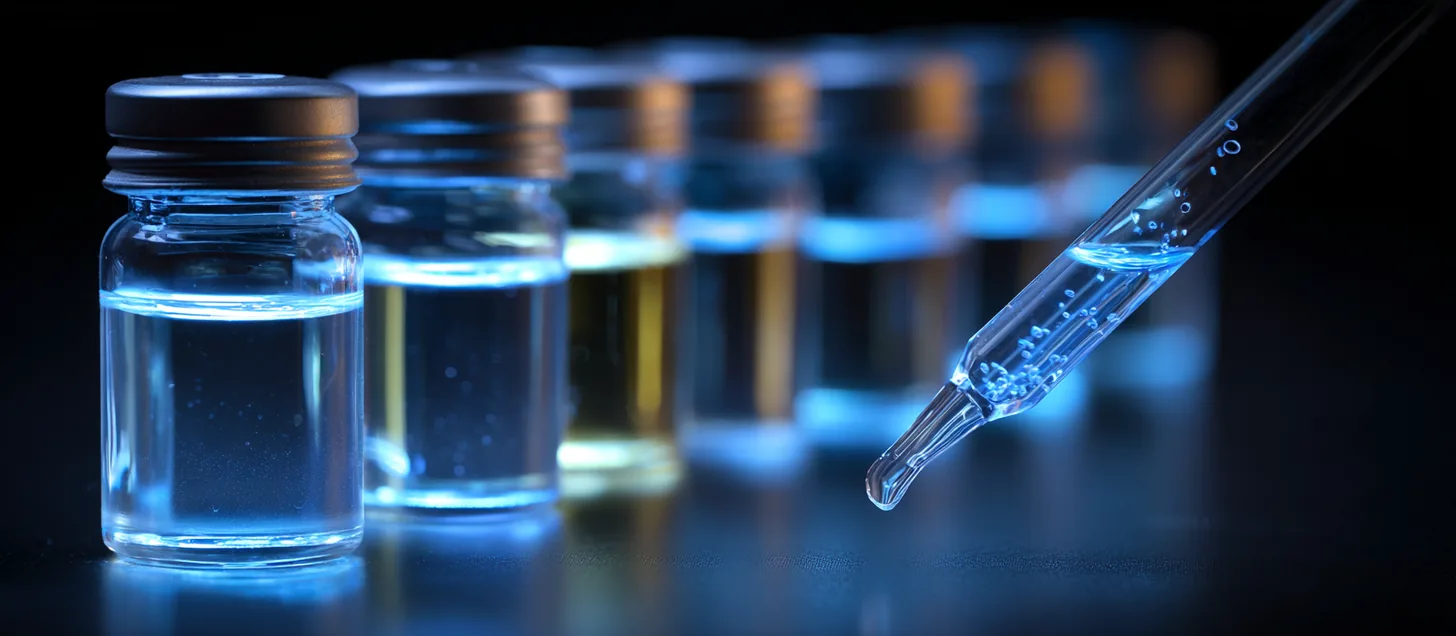
Laboratory tests in the reef aquarium — from chemical analysis to biological testing
Laboratory tests in the reef aquarium — from chemical analysis to biological testing
Home tests tell you a great deal — but not everything. Alkalinity, calcium, magnesium, nitrate and phosphate are measurable by titration or colorimetry with reasonable accuracy. But a bottle’s colour reaction cannot distinguish cobalt from a cobalt concentration of zero — it just shows “nothing”. The same applies to chromium, selenium, vanadium and dozens of other elements that coral biology needs, or that can accumulate in the tank as harmful impurities.
Laboratory tests fill this gap. Two clearly different test categories are now available for hobbyist use: chemical water chemistry analyses and biological tests. The first measures the water’s element concentrations instrumentally — the latter identifies the tank’s organisms from their DNA. Both complement each other, and each has its own use case.
1. Why a laboratory test — what a home test cannot reach
Home tests have a physical limit: they rely on colour reactions or titration, whose sensitivity is at best in the microgram-per-litre range. Several biologically significant trace elements — cobalt, chromium, copper, selenium, vanadium — occur in healthy seawater at the nanogram level. A home test cannot read them at all.
This creates a practical problem: a hobbyist whose tank looks normal on all home tests does not know whether the tank has enough cobalt biologically, whether lead or cadmium has accumulated to harmful levels, or whether a GFO reactor is aggressively depleting trace elements. A laboratory test reveals these.
A second limitation of home tests is repeatability. Titrated alkalinity is a reliable hobbyist-level measurement. But iodine at 0.011 mg/L on a colorimetric test may actually be 0.008–0.015 mg/L — when the laboratory measures it by ion chromatography or ICP-MS, the result is unambiguous.
A laboratory test does not replace a home test. It complements it — providing once a month or per quarter a deep cross-section of the tank’s state that daily or weekly home testing cannot reach.
2. Chemical water chemistry analyses — ICP and related methods
Methods in brief
ICP-OES (Inductively Coupled Plasma Optical Emission Spectroscopy) is an optical emission analysis. A water sample is nebulised into argon plasma (~10,000 °C), causing elements to emit characteristic light whose wavelength and intensity are identified. The method is fast and reliable, but its detection limit is ~1 µg/L — for most elements measurable by OES this is sufficient, but for some rare trace elements it is not.
ICP-MS (Inductively Coupled Plasma Mass Spectrometry) uses mass spectrometry. Ions generated from the plasma are sorted by mass-to-charge ratio — the method is 100–10,000 times more sensitive than OES depending on the element. ICP-MS enables measurement of elements at the nanogram level, which is essential for reliable analysis of chromium, cobalt, copper and selenium in a seawater matrix.
Ion chromatography (IC) is the standard method for fluoride and nitrate — these are not measured by ICP but by a separate ion chromatograph. Laboratories that report measuring nitrate and fluoride use an IC device alongside the ICP.
Titration is the most accurate analytical method for alkalinity (dKH) — potentiometric titration is established as the laboratory standard. Home tests titrate on the same principle but with less precise endpoint detection.
Hobbyist laboratories therefore do not use one device — they use 4–6 different analytical methods to produce the same test result. Dr. Kristoff Denk (Oceamo) puts it well: “I prefer the term ‘laboratory test’ rather than ‘ICP test’, because it is not one device.”
Fauna Marin — three tests
Fauna Marin offers three ICP-based analysis packages that differ significantly both in method and scope.
Reef ICP (OES basic test) — 37 parameters
A pure ICP-OES analysis. Covers the most important macroelements, trace elements and contaminants:
- Macroelements: Na, Ca, Mg, K, S, Sr, B, Br, I, P
- Trace elements: Mn, Li, Mo, Fe, Cr, Co, V, Zn, Ba, Se, Cu, Ni
- Contaminants: Al, Sb, Sn, Be, Ag, W, La, Ti, Zr, As, Cd, Hg, Pb
RO/DI water analysis is not included. Alkalinity (dKH), nitrate and fluoride are not measured at this level. Turnaround 24–48 hours from sample arrival at the laboratory.
Reef ICP Total — 90+ parameters
Fauna Marin’s most comprehensive OES-based analysis. Includes all Reef ICP parameters and additionally:
- Macroelements extended: chloride, sulphate, fluoride
- Nutrients: nitrate, nitrite, total phosphorus, ortho-phosphate, silicate
- Basic values: electrical conductivity, density, pH, alkalinity, CO₂, acid binding capacity
- RO/DI water analysis: 20 different contaminants and nutrients — included at no extra charge
- Ratio values: salinity line, dynamic element ratio
The method is still ICP-OES but supplemented with ion chromatography (F, NO₃) and other laboratory analytical methods. The Total test is the natural choice when you also want to compare the RO/DI source water against the tank or monitor nutrients precisely.
Reef ICP Super MS — five analyses in one test
Fauna Marin’s newest and most comprehensive analysis package. Super MS is not merely an OES+MS combination — it includes five separate analytical methods in one price:
- Fauna Marin Reef ICP Total — the complete 90+ parameter OES analysis is included in full
- ICP-MS — ultra-trace-level measurements for trace elements that OES cannot reliably reach in a seawater matrix (Cr, Co, Cu, Se, Zn and others)
- SAC 254 — UV absorption measurement of organic load (an indirect DOC indicator). Reference values: below 2 very low, 2–8 normal, above 8 elevated — a rising trend is a more significant signal than a single absolute value
- NPOC — direct total measurement of dissolved organic carbon (Non-Purgeable Organic Carbon, TOC analyser). This matches Triton N-DOC’s measurement method — Super MS includes it automatically
- TnB Organic — organically bound nitrogen (bound nitrogen). Together with NPOC gives a picture of the tank’s organic matter quality
The analysis result passes through an integrated AI system before the report is published. The AI automatically checks the plausibility of all values, identifies anomalies and measurement errors, and initiates automatic remeasurement for suspicious results. The system learns from each sample and continuously refines reference values and recommendations.
The comparison database is exceptional: results are compared daily against long-term stable coral farms and leading public aquariums worldwide. Reference values are therefore practical, drawn from actual data on hobbyist tanks — not theoretical laboratory values.
ATI — three levels
ATI (Aqua Tropic International, Germany) is the pioneer of ICP laboratory services for hobbyists — the first ICP-OES services intended for hobbyist level from the early 2000s. ATI’s laboratory in Germany uses the Spectro Arcos II device, which is top-of-the-range ICP-OES equipment. Laboratory director Dr. Ben Funk. All three levels available directly to the EU area.
ATI ICP-OES Standard — 40 parameters
OES basic test, purely ICP-OES. Does not include alkalinity, nitrate or fluoride — no RO/DI analysis. Suitable for a hobbyist who wants trace element monitoring and contaminant mapping without a full package.
Measured parameters:
- Macroelements: Na, Ca, Cl, Mg, S, K, Br, Sr, B, F
- OES trace elements: Ba, Be, Fe, I, Li, Mo, Ag, Si
- OES contaminants: Al, Sb, Bi, Cd, La, Tl, Ti, W
- Additionally OES level: As, Cr, Co, Cu, Mn, Ni, Se, V, Zn, Sn
ATI ICP-OES Pro — 43 parameters
The original ATI ICP test, now named Pro. All Standard parameters plus: alkalinity (dKH) by titration, nitrate by ion chromatography, fluoride by ion chromatography. RO/DI water OES analysis included. This is ATI’s recommended level for experienced hobbyists.
ATI ICP-MS Ultimate — 50 parameters, hybrid method
ATI’s most comprehensive analysis. Combines OES breadth with MS precision and adds dual validation: several elements are measured by both OES and MS methods, allowing measurement errors to be ruled out. Includes all Pro parameters plus MS-level trace elements and contaminants:
- MS trace elements: As, Cr, Co, Cu, Mn, Ni, Rb, Se, V, Zn, Sn
- MS contaminants: Pb, Nd, Nb, Zr, In, Ge, Ga, Hg, Te
Rubidium (Rb) is a significant addition in the ATI Ultimate MS test: elevated Rb together with Ba and Cs is a strong indicator of zeolite use in the tank.
Oceamo — full ICP-MS, SAC254
Oceamo (Austria, Dr. Christoph Denk) is the only service that uses ICP-MS as its primary method — not as an addition to OES, but as the primary analytical method. This means higher sensitivity across the board. Oceamo runs positive pressure air in its laboratory (the door opens inward due to the positive pressure) — dust contamination is ICP-MS’s greatest challenge, because at measurement sensitivity levels even air dust exceeds measurable concentrations.
Oceamo measures SAC254 as part of the MS analysis — reference values 2–8, according to Christoph Denk. The test also includes RO/DI water analysis.
North American distribution channel: Reef Moonshiners (Andre). EU orders directly from Oceamo’s own website.
Triton — ICP-OES, 45 parameters
Triton Applied Reef Bioscience (Germany) made the ICP test known in the hobby community in 2011–2015. Triton’s own ICP-OES analysis measures 45 parameters — including fluoride, chloride and salinity, which were added later in an update. The test is part of the broader Triton ecosystem but also works well independently.
Triton’s test is linked to the MYTE subscription service (Master Your Trace Elements), in which Triton formulates two personalised trace element mixes monthly based on the previous ICP result — 15 elements in two bottles. Triton is a German company and the ICP test is available in the EU. MYTE subscription service EU availability is currently unclear — check directly with Triton when ordering.
Oceamo Organo-MS — organic chemistry, a new test category
Oceamo published in spring 2025 a completely new type of analysis that complements ICP-MS in its own domain: organic compounds. ICP-MS measures elements — Organo-MS measures molecules.
The method is liquid phase liquid chromatography combined with high-resolution Orbitrap mass spectrometry (LC-Orbitrap MS). The device is the same technology used in medical research and environmental analytics — previously out of reach for hobbyists due to cost.
What Organo-MS measures:
- Amino acids and vitamins — enables data-driven dosing instead of blind routine supplementation
- Environmental toxins — pesticides, herbicides, PFAS compounds, pharmaceutical residues
- Marine toxins — palytoxin (Palythoa species) and other biological toxins
- Plasticisers and flame retardants — environmental pollutants, sunscreen chemicals
- Broad non-targeted screening — database of over 50,000 substances, from which even untargeted compounds are identified
The report lists over 100 targeted compounds quantitatively. Compounds that cannot be quantified are presented as a “count” — the value is still comparable between tanks.
Organo-MS is the most natural choice for situations where chemical parameters are correct, biology is functioning, but there is unexplained suffering in the tank — or when you want certainty that the tank does not contain palytoxin or other biological toxins before working with them.
EU availability: yes, directly from Oceamo’s own website or via the Reef Moonshiners distribution channel.
Comparison table — chemical analyses
| Service | Method | Parameters | dKH / NO₃ / F | RO/DI | SAC254 | EU availability |
|---|---|---|---|---|---|---|
| FM Reef ICP | OES | 37 | No / No / No | No | No | Yes |
| FM Reef ICP Total | OES + IC + others | 90+ | Yes / Yes / Yes | Yes (free) | No | Yes |
| FM Reef ICP Super MS | OES + MS + NPOC + TnB | 90+ + NPOC + TnB | Yes | Yes | Yes + NPOC + TnB | Yes |
| ATI Standard | OES | 40 | No / No / No | No | No | Yes |
| ATI Pro | OES + IC + titration | 43 | Yes / Yes / Yes | Yes | No | Yes |
| ATI Ultimate MS | OES + MS (hybrid) | 50 | Yes / Yes / Yes | Yes | No | Yes |
| Oceamo ICP-MS | MS (primary) | ~45 | Yes | Yes | Yes | Yes |
| Oceamo Organo-MS | LC-Orbitrap MS | 100+ targeted + 50,000 library | — | — | — | Yes |
| Triton ICP-OES | OES | 45 | Yes / Yes / Yes | — | No | Yes |
3. Biological tests — DNA sequencing and microbiome analysis
Chemical tests tell you what the water contains as elements. Biological tests tell you who lives in the tank — at the molecular level. These are two completely different questions, and only together do they give a comprehensive picture of the tank’s state.
AquaBiomics — microbiome and eDNA (USA, international shipping)
AquaBiomics (Dr. Eli Meyer) offers two separate tests whose methods and targets differ from each other.
Microbiome test — bacterial community map
The core method is 16S rRNA gene sequencing: a universal bacterial and archaeal marker by which the species and relative abundance of all microbes in the water sample are identified. A sample is collected by filtering a specific volume of water through an extremely fine filter that retains microbial cells. Additionally, a biofilm sample is taken from piping or a hard surface in the tank by swabbing.
The test produces two indices:
- Diversity score — the number of different bacterial and archaeal strains in the sample. High does not always mean good: a sudden rise in diversity can be a sign of a disturbed state, not health.
- Balance score — correlation between the sample and a healthy reference tank’s microbial profile. A high balance is almost always a positive sign.
The reference database consists of over 2,000 functioning hobbyist tanks — not natural ocean, not laboratory conditions. This is both a strength (relevant to the hobbyist context) and a limitation (does not aspire to a natural reef ideal, but the average of a functioning hobbyist tank).
TankDNA / eDNA test — mapping all organisms
eDNA (environmental DNA) is DNA traces left in the environment by all organisms — cells, shed material, secretions. eDNA analysis identifies eukaryotes — nucleated organisms: fish, coral parasites, dinoflagellates, diatoms, rotifers, bristle worms, molluscs, crustaceans and others. The test uses the broad 18S marker, which covers a wide range of organisms.
Practical benefit: the test can identify Cryptocaryon irritans (white spot disease), Amyloodinium ocellatum (velvet disease) and Brooklynella hostilis in the tank before symptoms are visible. Coral parasites such as AEFW (Acropora eating flatworms) are identifiable on the same principle.
Limitation: the 18S marker is weak at species-level discrimination in closely related coral species or fish. For this, AquaBiomics is developing the Lineage project, which uses multiple parallel markers for more precise species determination.
Panta Germ 3-Phases — three-phase microbiome analysis (EU, Germany)
Panta Rhei Aquatics (Germany) published the Panta Germ 3-Phases analysis at the end of 2024. It is a biological test available in the EU that approaches the tank’s biology from three different perspectives in one package.
Phase 1 — Open-water eDNA
A specific volume of tank water is filtered through an extremely fine filter that retains all organic material — including microbes swimming in the free water mass and the DNA traces they leave behind. DNA is extracted from the filter and sequenced in the laboratory. The result tells what organisms and microbes live in the tank’s free water mass.
Phase 2 — Biofilm eDNA
The test kit includes a colonisable substrate — a small platform placed in the tank or sump for 14 days. During this time, the tank’s microbiome colonises the surface just as it colonises rock or plastic pipe. After two weeks the substrate is removed and sent to the laboratory. DNA analysis tells what species specifically grow in the biofilm — a different question from what floats in the free water.
Phase 3 — Total bacterial count
The test kit additionally includes a bacterial culture plate: it is dipped in the tank for 30 seconds and sealed in a tube with growth solution. In the laboratory, the total number of bacterial colonies that develop on the plates is counted. This is a quantitative result — not species information but total bacterial count, which indicates the tank’s microbial load.
Price: 109 € (June 2026). Available directly from Panta Rhei’s online shop to the EU area.
Triton N-DOC — total dissolved organic carbon measurement
N-DOC is Triton’s separate laboratory test, not part of the standard ICP package. The method is a TOC analyser (Total Organic Carbon), which measures the entire dissolved organic carbon fraction — both aromatic structures (which SAC254 measures) and the more labile organic matter outside them.
Note: FM Reef ICP Super MS includes NPOC measurement (Non-Purgeable Organic Carbon) automatically as part of the package. NPOC and TOC are practically the same measurement under different names — Super MS users get DOC data without a separate N-DOC order. Triton N-DOC is therefore relevant particularly for hobbyists using the Triton ICP test.
Comparison table — biological tests
| Service | Method | Identifies | EU availability | Price |
|---|---|---|---|---|
| AquaBiomics Microbiome | 16S sequencing | Bacteria + archaea, species + abundance | International shipping | ~$90 |
| AquaBiomics TankDNA | 18S eDNA sequencing | All eukaryotes (fish parasites, AEFW, dinos…) | International shipping | ~$90 |
| Panta Germ 3-Phases | eDNA + biofilm + bacterial count | Free water + biofilm + total bacterial load | Yes (Germany → EU) | 109 € |
| Triton N-DOC | TOC analyser | Total DOC (organic carbon) | Yes | — |
4. ICP-based personalised trace element services
The natural continuation of ICP analysis is personalised correction: the laboratory reads the result and formulates a trace element mix tailored to exactly that tank. The hobbyist does not need to calculate individual bottle doses — they get a ready-made mix for direct use. Three services currently offer this in the EU.
Fauna Marin Reef Pills
Reef Pills is FM’s ICP-based personalised tablet formulation. Operating principle: the hobbyist sends a water sample to FM’s laboratory (Reef ICP or ICP Total), and based on the results the laboratory manufactures personalised tablets — each tablet contains exactly as many trace elements as that particular tank needs. The hobbyist adds the tablets directly to the tank or sump, where the trace elements are released slowly in a steady stream.
Reef Pills utilises a tablet formulation that enables concentrations difficult to combine safely in a liquid solution. Environmental angle: reusable packaging.
EU availability: yes, directly from faunamarin.de.
Oceamo Custom Elements
Oceamo Custom Elements is a personalised solution set based on ICP-MS results. Operating principle: after ICP-MS analysis, the hobbyist enters the analysis ID in Oceamo’s system, which calculates the tank’s deficiencies and formulates a set of 1–4 containers.
In two phases:
- Correction phase: containers are added to the tank at intervals (typically over 10–20 days) to raise deficient values to level.
- Maintenance phase: two 100-day dosing bottles maintain continuous ultra-trace element maintenance.
Elements covered by Custom Elements: macroelements Ca, Mg, Br, B, K, Sr and trace elements Li, Rb, Ba, V, Zn, Mo. Based on ICP-MS analysis additionally: Cr, Co, Fe, Mn, Se, Cs, Sn, Ni.
Difference from Triton MYTE and FM Reef Pills: Custom Elements is not a monthly subscription — each set is ordered separately after a new analysis, which suits a hobbyist who wants ICP-guided correction without committing to a fixed schedule.
EU availability: yes, directly from en.oceamo.com.
Triton MYTE
MYTE (Master Your Trace Elements) is Triton’s monthly subscription service that combines ICP-OES analysis and a personalised trace element mix delivered monthly. Each delivery includes two bottles — Macro Elements and Trace Elements — formulated for 15 elements based on the previous ICP result. The ICP test is included in the subscription price.
MYTE works most naturally combined with the Core7 Flex Base Elements system, which handles Ca, Mg and alkalinity — MYTE completes the fine-tuning.
EU availability: Triton is a German company and the ICP test is available in the EU. MYTE subscription EU availability is unclear — check directly with triton.de when ordering.
Comparison — personalised trace element services
| Service | Form | Basis | Order logic | EU |
|---|---|---|---|---|
| FM Reef Pills | Tablets | Reef ICP or ICP Total | As needed | Yes |
| Oceamo Custom Elements | Solution set 1–4 pcs | Oceamo ICP-MS | As needed | Yes |
| Triton MYTE | Liquid bottles 2 pcs | Triton ICP-OES | Monthly subscription | Unclear |
5. How to choose
The abundance of tests can be confusing. Here is a simple decision tree by starting situation.
New tank (under 12 months) or first laboratory test ever: Start with ATI Pro or FM ICP Total. Both cover alkalinity, nitrate, fluoride and RO/DI analysis — they offer a complete baseline mapping without leaving anything essential in the dark. ATI Pro is the most widely available in the EU through distributors.
Established tank, routine monitoring: FM ICP Total or ATI Pro every 4–6 weeks. The result shows the trend — more important than a single data point is the direction.
Demanding SPS tank or suspected trace element problem: FM Reef ICP Super MS or ATI Ultimate MS or Oceamo ICP-MS. All three offer MS-level sensitivity for elements that OES cannot reliably reach. SAC254 is included in FM Super MS and Oceamo — a significant addition for DOC situation monitoring.
Tank showing symptoms that chemical parameters do not explain: A biological test is the next step. AquaBiomics Microbiome shows bacterial dynamics, TankDNA reveals invisible parasites. Panta Germ 3-Phases is the most natural EU option, combining both perspectives in one package.
Established tank, using carbon dosing or organic nutrition is intensive: Add organic carbon monitoring to the routine. FM Super MS includes NPOC and TnB Organic automatically. Oceamo measures SAC254. Triton N-DOC is a separate add-on for Triton ICP users.
Unexplained suffering even though chemical parameters are correct: Oceamo Organo-MS is the first check — palytoxin, pharmaceutical residues, pesticides or other organic compounds may be the cause. This is a diagnostic test, not a routine.
ICP result shows deficiencies in multiple trace elements, not wanting to calculate individual bottles: FM Reef Pills (tablet form, based on FM ICP), Oceamo Custom Elements (solution, based on Oceamo ICP-MS) or Triton MYTE (monthly subscription, based on Triton ICP) handle the correction without calculation.
6. Rhythm and interpreting results
One laboratory test is a data point. Two is a trend. Three begins to tell a story.
A practical rhythm for an established tank: ICP chemical analysis every 4–6 weeks. Biological test twice a year or when chemical parameters are correct but the tank is not behaving as expected.
A few basic rules for interpretation:
Salinity first. All macroelement reference values are calibrated to 35 ppt. If the sample was taken at 34 ppt, element measurement values will appear lower than they actually are relative to natural seawater. Good laboratories correct this automatically — but the hobbyist should be aware of it.
Trend beats absolute value. Selenium at 0.8 µg/L is a data point. Selenium at 0.4 → 0.2 → 0.1 µg/L over three consecutive tests is an untold declining trend — even if the individual value is not yet alarming.
OES zero does not mean zero. If chromium, copper, selenium or cobalt shows “0” or ”< LOD” in an OES test, it means the OES method cannot read such a low concentration — not that the element is absent or at sufficient levels. An MS-level test is the only way to verify the actual concentration for these elements.
Laboratory ≠ laboratory. The same elements from the same water sample can produce different readings at different laboratories. This is affected by sample collection purity, transport time, the laboratory’s cleanroom level and the quality of calibration standards. This does not mean tests are useless — it means that consecutive results from the same laboratory are comparable against each other. Changing laboratory mid-monitoring period breaks trend comparison.
References
Peer-reviewed research
- Haas, A. F. et al. (2016). Global microbialization of coral reefs. Nature Microbiology, 1, 16042.
- Thompson, L. R. et al. (2017). A communal catalogue reveals Earth’s multiscale microbial diversity. Nature, 551, 457–463.
- Jeunen, G. J. et al. (2019). Environmental DNA (eDNA) metabarcoding reveals strong discrimination among diverse marine habitats connected in a tidal system. Environmental DNA, 1(3), 177–190.
Hobbyist literature and brand documentation
- Denk, C. (Oceamo). Beyond The Reef Podcast — The Complete ICP Walkthrough: Every Element Explained. Podcast transcript, provided for reference.
- Denk, C. (Oceamo, 2025). Introducing the Oceamo Organo-MS Analysis. Reef2Reef, May 2025. en.oceamo.com.
- Meyer, E. (AquaBiomics). Reef Therapy Podcast Episode 128 — DNA Sequencing, AI Tank Management & The Bottled-Bacteria Problem. Podcast transcript, provided for reference.
- Balma, A. (AquaBiomics). Beyond The Reef Podcast — The Microbiome Deep-Dive. Podcast transcript, provided for reference.
- Fauna Marin (2025). Reef ICP Test, Reef ICP Test Total, Reef ICP Super MS — product descriptions. faunamarin.de.
- ATI Aquaristik (2026). ICP-OES Standard, Pro & Ultimate MS — product descriptions and parameter lists. atiaquaristik.com and atinorthamerica.com.
- Oceamo (2025). Custom Elements — Tailor-made for your aquarium. en.oceamo.com.
- Fauna Marin (2024). Reef Pills — ICP-based personalised tablet formulation. faunamarin.de/reef-pills.
- Oceamo (2024). SAC254 — Measuring Dissolved Organic Carbon with ICP-MS. en.oceamo.com.
- Panta Rhei Aquatics (2024). Panta Germ 3-Phases — Microbiome Analysis. panta-rhei-aquatics.com.
- TRITON Applied Reef Bioscience (2026). MYTE — Master Your Trace Elements. triton.de/en/myte.
- Clemens, S. (2024). DOC: The Critical Parameter the Reef Industry is Ignoring. Reef Builders, 21.6.2024.
Books and textbooks
- Delbeek, J. C. & Sprung, J. (1994). The Reef Aquarium, Vol. I. Ricordea Publishing, Miami.
- Borneman, E. H. (2001). Aquarium Corals: Selection, Husbandry, and Natural History. Microcosm, Charlotte.
- Fenner, R. M. (2001). The Conscientious Marine Aquarist. Microcosm, Charlotte.